
Many horse owners worry when their horse becomes overweight or struggles with weight control. However, a horse's excess weight can have more than just aesthetic reasons – it's a serious health risk. Especially Equine Metabolic Syndrome (EMS) in horses Being overweight, obese, or having racial predispositions can significantly impair your horse's well-being and quality of life. An increased Body Condition Score (BCS) of > 6 raises the risk of your four-legged friend developing EMS.
Was ist EMS?
EMS in horses, that Equine Metabolic Syndrome, is a metabolic disorder that primarily affects overweight or obese horses. Insulin resistance is typical, which increases the risk of Laminitis massively increased. Even horses that appear to be lean can be affected, therefore the diagnosis should never be made on weight alone.
EMS leads to a disruption in sugar metabolism and can have a significant long-term impact on a horse's health.
Body Condition Score (BCS)
The Body Condition Score is an important tool for assessing your horse's weight and fat distribution. It ranges from 1 (very thin) to 9 (extremely obese).
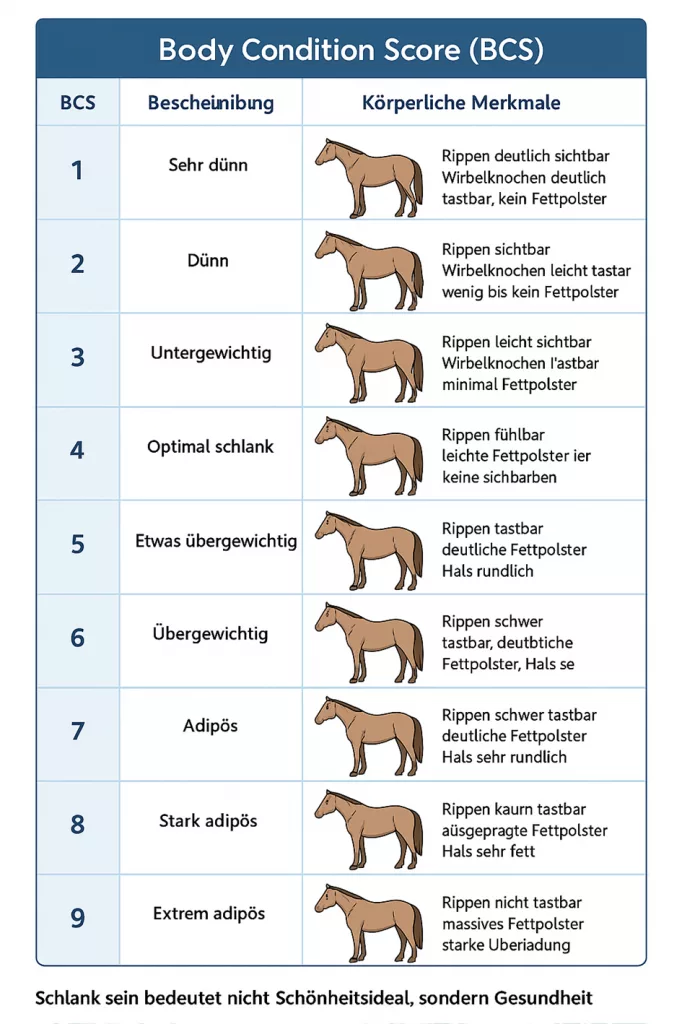
Note: Being slim doesn't mean an ideal of beauty, but health. An optimal BCS reduces the risk of EMS and laminitis.
Key risk factors
- Overweight and obesity: Typical fat deposits on the neck, croup and shoulder area.
- Breed predisposition Ponies, Icelandic horses, or sturdy cold-blooded types are genetically more susceptible to EMS.
- Health before beauty: A healthy BCS protects against metabolic disorders and laminitis.
Symptoms of EMS
- Overweight or irregular fat distribution
- Fat deposits on the neck, croup, and shoulder
- Recurrent or chronic laminitis
- Stiffness, lameness or refusal to move after eating.
- Tiredness or reduced willingness to perform
Prevention and management
- Regular weight monitoring Check Body Condition Score regularly
- Tailored feeding Reducing feed high in sugar and starch
- Movement Moderate, regular exercise supports metabolism
- Veterinary control: Monitor insulin levels and health status
- Race consciousness Regularly check particularly susceptible breeds.
Conclusion
EMS is a serious metabolic disorder, closely linked to obesity and laminitis. Early detection, regular weight management, and a targeted approach can reduce the risk and significantly improve your horse's quality of life.
Being lean doesn't mean an ideal of beauty for your horse, but health – and that is the goal of every responsible horse owner.
Phone: +49 151 23063527
E-mail: